Showing posts with label Chesed. Show all posts

Wednesday, May 11, 2011

Day 22: Getting Back In the Saddle - this time with ENDURANCE!

For those of you following along my journey in counting the omer, I owe you all an apology.  I have been off-track the past few days, counting the omer on my own (my wife can attest to that!), but not able to post my semi-rambling, sometimes insightful omer dealings.  It was the week of compassion, and I took compassion on my family and myself by focusing a bit more on other aspects of life that were being neglected.  At least, that's how I justified it to myself.  But while I can apologize in words, I will try my best to do so in action by re-committing to this blogging of the omer! 

But, I made a commitment, and though I have already fallen off of the goal of an update-a-day, it does not meant that I have to leave the whole project behind.  So. . . 


Today is Day 22, which is 3 weeks and one day of the Omer . . . . . . Ha-yom Shnaim v'esrim yom shehem shloshah shvuot v'yom echad la-omer
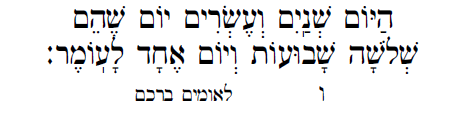
 
Now, isn't this appropriate? We're picking back up during the week of endurance.  It's time now to focus on aspects of our lives in which we need to work on determination, patience, vigor, vision, follow-through, and focus in addition to any other values that help us to continue to travel towards our goals, even when we fall short, struggle, or see the end as VERY far away. 

THE OMER INTERSECTION: Nitzach + Chesed;  Love in endurance
Well, isn't this appropriate?  We've just in time to move on to our next week: Nitzach - endurance.  As a Cubs fan, I know a lot about endurance.  We all commit ourselves to people, projects, goals, and even TEAMS that we know are going to require us to give a lot of ourselves, and we may not know how long it will take to get to the desired outcome/relationship/World Series.  When challenges to those goals arise, if we value our long-term outlook that much, then we have to find a way to endure through the difficulties.  (Oy, I am so disappointed in myself as I write this, but now I need to find a way to endure). 
The first step of figuring out how to endure comes at us with today's omer intersection.  Often when we get into the nitty-gritty of performing the tasks that build towards the ultimate goal, we can lose sight of why we set out to do so in the first place.  Most of the time, as we learned in our week of discipline, gevurah, we commit ourselves out of love.  And this is one of the first places to look when we need to find endurance, as well.  Our chesed is a vital component to reminding us why we set out on our paths in the first place.  If we can spark that sense of love back into our hearts - seek out an element of joy in the tasks at hand that remind us of the reasons we need to endure - then we can find our Nitzach and continue on! In addition, our chesed can help guide us when we find that the ways in which we have been trying to endure may not be the healthiest of best approaches. 
THE OMER CHALLENGE: 
So, how do we apply this idea? Well, I'm working on it right now with this blog entry.  Over the past few days, the idea of counting was pretty empty without the writing and reflection that came with it.  As I type and return to reflection, I'm being reminded again of all that I had been gaining as a result.  At the same time, I may have needed this hiatus and extra time in my day in order to be all the things I was trying to become, especially during the week of compassion.   
For today, the challenge is two-fold: 
1) Let us identify a commitment with which we are struggling.  Take out a sheet of paper and actually write down three reasons we started down that path in the first place.  If the reasons do not include any aspect of love, then we either need to keep searching, or we may need to re-evaluate our commitment!
2) With this same commitment, take a step back and access that bit of love that we find.  Let's reflect on our actions of late and see if we need to find a different pattern of action to help us stay on task. 

OMER REFLECTION:
So, I hope to offer some additional thoughts on compassion at some point.  Perhaps I can make teshuvah, repentance, for the missed days of compassion by exploring them additionally after the omer officially ends.  I'll figure a way forward with that one - both for all those of you who are reading and journeying with me and also for myself to be able to get that sense of endurance and dedication, nitach and gevurah, that I have sought with this project.
I did realize, though, that time away sometimes helps us to value what we have.  And now that this post is coming to a close, I am once again excited by the opportunity to reflect, take a step back, and choose my concerns more consciously than I do when I do not make the time for such structured reflection.  Let's hope that you, too, can find that same space within the rest of the omer!

Wednesday, May 4, 2011

Day 15: Transitioning to Compassion


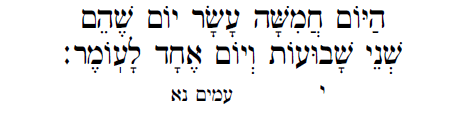
Today is Day 15, which is 2 weeks and one day of the Omer . . . . . . Ha-yom chamishah asar yom, she-hem shnei sh'vuot v'yom echad la-omer.


This week we move from the judgment and commitment of discipline to a somewhat opposite perspective - compassion, tiferet.  To have compassion for someone else actually requires us to suspend our judgment, to leave that to others.  The Spiritual Guide to the Omer mentions that compassion is a blending of the harmony of chesed, loving-kindness, with the discipline of gevurah, making it the next logical step in our journey.


THE OMER INTERSECTION: Tiferet + Chesed;  Compassion Converging with Loving-kindness
We start out with a bit of a softball, so to speak.  It is hard to imagine compassion without chesed, love.  And I'm starting to notice a trend in this system - the starting point of each of our values will be love.  It is a reminder that the ideal reasons we commit ourselves to any of these other values comes from the Huey Lewis sponsored power of love.
Love is the obvious starting point, middle point and ending point of compassion.  The struggle, the challenge to harmony, that emerges from the convergence of these values, I suppose, is to be vigilant of when our compassion does not come from love.  Have we ever taken someone else's side of an argument just because we were angry with a third party?  Have we overtly shown compassion to another because we have something to gain for ourselves?  


THE OMER CHALLENGE: 
So, how do we apply this idea?  Despite the reflection above, I am looking forward to partaking in the challenge from the Spiritual Guide to the Omer.  It compels us to ask the following questions: Ask yourself: Is my compassion tender and loving or does it come across as pity? Is my sympathy condescending and patronizing? Even if my intention is otherwise, do others perceive it as such? Does my compassion overflow with love and warmth; is it expressed with enthusiasm, or is it static and lifeless?
Applying these thoughts to our everyday lives, such questions challenge us to bring genuineness (I don't think that is a real word - I stand corrected, it is in the dictionary) to our expressions of compassion.  To truly let our heart sit with the other, and be true to the other and to the emotions of love that we are feeling.  
So, how would we apply this in specific, measurable actions?  Let us go a bit above and beyond in expressing love to another in one of the relationships that are easy for us to take for granted.  Make time to express our compassion.  Let us be genuinely caring with our family; let us be active, alert, giving listeners to the personal saga of our co-workers; let us actually wait for and listen to the response to our question, "How are you today?" when we ask it.    

OMER REFLECTION:
This is another one in which I have failed to complete the challenge I set out for myself - thought it is not too late to follow through.  My New Year's list is at home, and we started the day in DC.  So, it was a bit tough to fully analyze my goals and assess/adjust/tinker towards a better state.  But now that we're back in Raleigh, I hope to follow-through with this one, even if I do it on another night of the
omer.  

Wednesday, April 27, 2011

Day 8: Moving On to Discipline

Today is Day 8, which is week 1 and 1 day of the Omer. . . Ha-yom shmoneh yamim, she-hem sh'vua echad v'yom echad la-omer.

Mazal tov to all of you who made it through the first week of the omer period.  We now shift to week 2, in which we take on a second of our virtues, Gevurah (discipline), and pick it apart from the various lenses of our Kabbalistic virtues.

In all honesty, this is the week I have been looking forward to exploring from the moment I conceived of this blog.  Gevurah, Discipline, infers judgment.  And when we commit ourselves to do something, we are making a statement that reveals what we have deemed to be important.  It is one thing to SPEAK our judgments and another thing to follow-through with them.  Gevurah is living-out our assessments.  
Personally, I am hoping to improve on my own sense of self-discipline in various areas of my life, and this week should offer me a lot of opportunities to reflect, learn, and grow in order to meet some of the goals I have for myself and to be the person - the individual, the husband, the father, the rabbi, the brother, the friend, the story-teller, the Cubs fan - who I aspire to be.

THE OMER INTERSECTION: Gevurot + Chesed;  We're not quite done with love . . . Where we find love in discipline.
Back on Day 2, we explored the intersection of these same two values, but we did so from the opposite point of emphasis.  Then, we looked at where we experience and express discipline in our loving-kindness.  Today, we are going to flip it around and explore how we experience loving-kindness in the midst of our discipline. 
When it comes to discipline, gevurot, really represents our level of commitment and focus to achieving a goal.  The concept of chesed in relation to discipline speaks to the vision and passion that keeps us going in our attempts at discipline.  We build up a routine of discipline around various behaviors which we find important and valuable, especially when the specific tasks that lead us to our bigger goals require repetition, patience, and step-by-step progress.  It is much easier to follow through with the annoying side of our commitments when we have a solid sense of purpose behind it all.  Often, our tendencies towards chesed reveal our central vision.  For instance, I am blogging every day of the omer.  On a night when I flew home from Florida after saying goodbye to my parents and siblings, dealt with a busy airport, jumped right back into work, and got home late from a board meeting, blogging was not necessarily the first thing I wanted to do.  Sleep has been calling my name since I got into my car to come home, and my bed is a delicious thought, even as I type it.  But, I am attempting to assert my discipline.  And when I remembered this week begins discipline, that this was one of the reasons for engaging in this blog, and that I ultimately wanted to work on my own level of commitment and follow-through so that I can treat my loved ones, my friends, and my community better . . . well, you're reading the results of where my desire to do chesed has influenced my gevurah, my discipline. 

THE OMER CHALLENGE: 
So, how do we apply this idea?  Discipline takes dedication, and at the most difficult times to stick to our goals, it requires a renewal of passion and motivation for why we are committed in the first place.  One of the exercises for today involves exploring the reasons we are dedicated to the various routine parts of our day.  For 24 hours, while performing acts of discipline, reflect for a bit on the bigger ideas behind why we are doing this.  As we identify our motivations, reach down to discover in what way love, chesed, is a source of our commitment - even if it is love of self!  For example, while brushing teeth (hopefully a routine discipline we engage in every day, multiple times per day), think deeply about why we're brushing.  The surface level of reflection should reveal that we brush so that our teeth and gums are healthy. But if we continue to reach towards the ultimate source of love in our rationale, we discover actual insights within the mundane.  Upon reflection, I realize that I brush my teeth so that my teeth will always be there as a part of my smile.  Ultimately, I love to smile and hope that my toothy smile will always be a source of pride and connection to others.  In such a way, brushing my teeth relates to my love for connecting with others and having a positive self image of myself - essentially having love for myself and it is a means towards showing love for others.  
Let us all find the love behind our routines.  And then prepare ourselves to put chesed a bit in the background for a week, until we re-encounter it on day one of week 3. 
 
THE OMER UPDATE:
Wow, I'm really surprised that I have had as much to say as I have written.  So far, I'm hoping that reading this blog is anywhere near as rewarding as it has been to write it.  Ultimately, it is not the reading or writing that has been meaningful, but the reflection and actions that I've taken as a result of those reflections that has made this a very worthwhile few days.
In regards to asserting my leadership as a giver of loving-kindness, I made my list, and I did my best in a busy airport to show kavod, honor, to those who most of the time deal with complaints. It was nice to have a conversation with the woman who checked our bags while waiting for the tags to be printed, and it gave me a few moments to relieve my anxiety of whether or not we would make it through the INCREDIBLE line at the Hollywood/Ft. Lauderdale airport security.  And a Temple board meeting is always a good place to attempt to help others sense the love and respect that I have been fortunate to receive from this community - I hope my attempts came through. 

DAY 7 FOLLOW-UP: Leadership in love list

So, I made a challenge to jot down a few thoughts on what it means to feel loved, so that we can go forth and try to help others feel the same way.  Here's the part of my list that I'm willing to put on public display in this forum:

HOW DO I FEEL WHEN I AM LOVED:

I feel validated.  I feel supported.  I feel lifted-up.  I feel not-alone.  I feel warm.  I feel unafraid.  I feel important.  I feel that I matter.  I feel entertained.  I feel connection.  I feel motivated to do more and be better.  I feel that it is possible for me to do more and be better.  I feel hope that the world can be improved.  I feel that I have partners in making this world better.  I feel like I can take risks and make mistakes and even fail, but that I will be able to continue to learn and grow, and that is okay.  I feel taller.  I feel that it is okay that the Cubs are the Cubs.  I feel heard.  I feel like giving.  

I know that I appreciate it when others help me to reach these emotions through the gifts of their love.  I hope that I've been to pass some of these rewards forward to those I encountered today, and that I can continue to do so even beyond today's experiment.

Tuesday, April 26, 2011

Day 7: Leading with Love

Today is Day 7, which is week 1 of the Omer. . . Ha-yom shivah yamim, she-hem sh'vua echad la-omer.


So, one week into the omer experiment, and we're still going strong!  Today is the last day of our week of chesed, loving-kindness.  Before moving onto discipline, gevurah, we have one last chance to focus on bettering our relationships and the giving part of ourselves.  So, let's make it count!

THE OMER INTERSECTION: Chesed + Malchut;  The Leadership of Love.
Malchut is the virtue that deals with leadership and sovereignty.  We do not often think of our loving relationships in terms of leadership.  There will be a chance to see what it means to be a leader who incorporates chesed, loving-kindness, which is an important quality of a good leader.  But today, we look at this intersection from the opposite emphasis: What does it mean to be a leader in a loving-relationship?  Part of this intersection has to do with recognizing how being loved can make us feel.  Our Jewish tradition teaches us to love God, Who is to be loved as a Leader/Sovereign.  In our relationships, when we feel loved, our spirits are lifted up and we are made to feel important and worthy.  And the hope is that such feelings help us to become more compassionate, more caring, more giving.  
At the same time, we should question what it means to be a leader in a loving relationship.  We should be reminded that sometimes, an effective leader needs to step back and not control every aspect of our world - especially when it comes to dealing with other people.  Each one of us has our own personal needs, stories, and expectations; and when we suppress others for our own gain, we are not being leaders in our loving relationships, we are instead using.  Today, we put together the lessons of the week to take a leadership role in loving others. 

THE OMER CHALLENGE: 
So, how do we apply this idea?  Leadership is much easier to talk about in theory than to implement in practice.  It's a tough one, but based on my reflections above, I've come up with a couple of concrete steps to take.  It is easy to take our relationships for granted, to be a passive participant by letting others relate to us.  So, for today, be an active chesed-giver - reach out to three people with whom we have not recently taken an active role in relating.  Set some concrete plans to catch-up with them and re-kindle the relationships.  
And in terms of feeling love, I know this sounds ridiculous.  But let us take out a piece of paper (or a word file on our computers), think of a few of our most dearly-held relationships, and write down a few thoughts on how we feel when we think of the love we receive.  How does it hold us up, and how does it give us strength?  Now, for the next 24 hours, let us try helping others we encounter experience the same emotional bolstering - whether with a spouse, a sibling, or with the check-out person at the grocery store.  Then, take this piece of paper (or file), and save it for day 43, where we might have a little exercise.   
 
THE OMER UPDATE:
Today was our last full day down in Florida with my parents and my sister, brother-in-law, and their 7-month-old.  It is so very easy to let these brief visits fly by and start preparing for "re-entry" into the normal, everyday realities too early.  Having yesterday's challenge of creating a memory made this day extra special for me, because I was attuned to trying to be present in moments and to capture them in my memory. 
Today, we got to spend time at a playground, watching my 17-month-old daughter interact with her 7 month-old cousin and her Bubby.  I took mental images of Bubby pushing each of these little ones in swings or walking with them, and their huge toothless or barely-toothy smiles as they watched her play with them.  I'll remember taking a walk around the block with this motley crew, doing our first "mom-and-dad swing" with our daughter, and the way that she would "run" with her feet in mid-air as we lifted her up.  And I took a mental picture of my parents putting their granddaughter to bed, as I peeked my head in the room when they were reading her a bedtime story.  The three of them cuddling on a bed, and as Bubby whispered one of the lines of the book instead of reading it, my daughter completed the last word on the page with a whisper, matching the tone and mood set forth by her matriarch.  Today was a good reminder to be fully present in the present with whomever we are spending time.

Monday, April 25, 2011

Day 6: A Different Kind of Passover Bondage

Today is Day 6 of the Omer. . . Ha-yom shishah yamim la-omer.


THE OMER INTERSECTION: Chesed + Yesod;  Bonds of Love.
With this day of the omer, we move beyond our individual reflection and focus to the aspect of love that recognizes that relationships are two-way streets.  To have a true relationship, we need a willing partner.  When my wife and I first got engaged, we took a "making marriage work" class because we wanted to make sure that we were doing whatever we could to maintain a healthy relationship.  One of the lasting lessons we took from that seminar is that before one can work on the issues in a relationship along with a partner, one must first work on oneself.  The past few days have hopefully prepared ourselves for this step: working with someone else - strengthening our bonds in the aspects of our loving relationships.

THE OMER CHALLENGE: 
So, how do we apply this idea?  When it comes to relationships, bonding requires time that is spent together having a shared experience.  Ultimately, those we feel closest with are those with whom we have created memories.  And while many memories just seem to happen, we also sometimes play a role in setting up those memorable moments by committing to spend time with another person, working together with a shared purpose.  So, for today, the task is: spend time with a person we love, and create a memory with them.  Remember: One of the key components to creating a memory is coming in to the experience with the intention of remembering what you are doing together.    
 
THE OMER UPDATE:
Humility can be difficult, especially when one sets out to operate primarily from such a mindset for an extended period of time.  It was a challenge at times to let things go and not need to be right, especially when working together with others to make decisions during the day.  At the same time, doing so was somewhat liberating.  I found that when I gave myself the opportunity to get away from "being right," I was a better listener.  I think I tend to operate in this mode in my work as a rabbi, but I do not know if I always model such an approach with my family and close friends.  This was a good reminder to get me back on track to being a better friend/relative/spouse.  I hope it was good for you, as well.
 

Saturday, April 23, 2011

DAY 5: Stepping forth humbly

Today is Day 5 of the Omer. . . Ha-yom chamishah yamim la-omer.

THE OMER INTERSECTION: Chesed + Chod;  Humility in Love.
Shavua Tov - may this be a fantastic new week!  Our intersecting virtues on this day involve the humbling aspects of love.  Showing loving kindness towards another can build us up and make us feel very big and important.  And yet it can also be a very humbling experience. Afterall, relationships happen between people, and they are not one-sided.  For the sake of the other, we sometimes willingly endure that which we typically would never think of doing for ourselves. 
If our valued relationships are to be healthy, we sometimes have to remove our own ego and humble ourselves before another. 

THE OMER CHALLENGE: 
So, how do we apply this idea?  In many ways, this has been a pre-requisite for the tasks in the last few days.  In order to ensure endurance in a relationship, to be able to find compassion in our love, we have to find a bit of humility in our hearts - to suppress our own needs for being right, to let go of some of our frivolous expectations, to put the desires of others ahead of our own.  This evening, as I settle in to write this blog, The Ten Commandments (digitally remastered in HD) is on in the background.  And appropriately enough, Charlton Moses just said: "I myself, I am nothing, it is the power of God which uses me to work His will."  If this is not humility, I don't know what is! 
So, for today's challenge, I'm putting forth some options - doing one of these would be great, doing all will feel even better.  But for today it is upon us to humble ourselves before our loved ones:
1) For one day, let go of the need to be right, and just be in relation.  
2) Go forth and do something for a loved one that is fully about their needs, and not our own - be an aide to working someone else's will.
3) Reach out and repair a strained relationship - no matter who was "at fault" or "to blame," humble yourself before them and reach out.  Make the first step in repairing the connection.

THE OMER UPDATE:
Yesterday involved a bit of self-reflection, thinking through the various aspects of the enduring nature of love.  I thought through some of what makes me worth loving - it sounds a bit egotistical, which is why it is good to be followed by this next day of humility.  But, I found it also to be a useful exercise in retaining self-confidence and self-worth.  Let us not get carried away with our reflections, and let today remind us that we have to continue to earn that worthiness of being loved through our behaviors and choices that we make each day.
In addition to the reflective pieces of the day, I had the opportunity to spend time experiencing some of my most enduring relationships, as my wife, daughter, and I are all in my hometown visiting with my parents and siblings and their families. What a blessing to be able to spend time together reconnecting, creating new memories, and re-invigorating our commitments to one another. 

Friday, April 22, 2011

DAY 4: Love that Endures

Today is Day 4 of the Omer. . . Ha-yom arba'ah yamim la-omer.

THE OMER INTERSECTION: Chesed + Nitzach;  The Endurance of Love.
Shabbat Shalom!  Today, we celebrate the aspects of chesed, lovingkindness, that are enduring.  We all hope that the loves in our lives will always be there.  It can be easy to take for granted that family or friends, parents or spouses or children will just be there for us.  However, this intersection of virtues reminds us that if we want to ensure this is the case, at times we have to invest in our relationships.  Enduring relationships don't just happen, we have to work at them.  We all carry with us expectations of others.  At times, we fail to live up to our loved ones expectations, and at other times, they disappoint us.  When these challenging times happen, we hope that our love will be strong enough to endure - that we will struggle with our unmet expectations and find a way to keep loving. 

THE OMER CHALLENGE: 
So, how do we apply this idea?  According to the Spiritual Guide to the Omer, this day is the opportunity to ask ourselves which relationships we have in our lives that are worth fighting for.  And from there, our challenge is to do something that fights on behalf of a loved one.  And this could be a wonderful challenge for the day!  At the same time, this thought should challenge us to think about what we offer to our loved ones that shows them and shows ourselves that we are worth fighting for, as well.  So, the action I'm going to suggest for this year is part reflection, part action.
1) Identify for ourselves why we are worth fighting for - why would someone put up with us in times in which we might fall short of the expectations of others.  If we can't see our own worth, it can sometimes be hard to ask others to be with us.
2) Think of your list of enduring loves - those loved ones for whom we would do anything, and vice-versa.  As you think through that list, try to identify who might need a little bit of extra support at this time.
3) ACT - go ahead and make a gesture of chesed, of loving-kindness, to support them in their struggles.  Reach out to one of those friends/family members/loved ones and show them how enduring your love is for them.    
THE OMER UPDATE:
Yesterday's omer challenge that emerged (with some effort) from the intersection of chesed with tiferet (beauty/compassion) was to make a detailed plan to surprise a loved one in an effort to make that relationship SHINE.  I found that to be a great way to marry these virtues in our world today.  I did set forth to make some detailed arrangements for a future date, and in doing so, it helped me remember just how beautiful it is to have a relationship with this person.  Maybe, once the plan comes to fruition, I might be able to share more details.  But for now, if you know me, be on the lookout - this could apply to you!
 

Day 3: Finding the COM in our Passion

Today is Day 3 of the Omer. . . Ha-yom shlishi yamim la-omer.

THE OMER INTERSECTION: Chesed + Tiferet;  Loving Kindness, meet beauty and compassion.
We all know that passion is a part of love.  And again, for this week, when talking about love, this is the expansive, all-types of love (romantic/familial/platonic . . .).  Any kind of love involves an excitement of our heartstrings and our soul - a driving force that makes us want to behave towards those we love in a way that we might not otherwise be a part of our inclination.  Yesterday, we explored how we reign-in that passion so that we do not lose ourselves in the ways we love and to ensure that we do not lose those we love by our over-(or under-)zealousness.

Today, we approach this passion from the viewpoint of Tiferet, beauty and/or compassion.  I should qualify this a bit more: beauty and compassion are often intimately linked.  Often, what we experience as beauty in this world is born out of a moment of compassion - a beautiful act of a child reaching out to help another or a parent who manages to get to a child's baseball game in support in-between business meetings.  This is the aspect of beauty that tiferet represents.

When thinking of this virtue of tiferet, for some reason, I could not help thinking back to my engineering days in which I was in charge of a project to create a system of continual change using five "S's": 1) Sort, 2) Set in order, 3) SHINE, 4) Standardize, 5) Sustain.  Once every item was sorted out and the excess was removed, and each item, tool, process, etc, had a place that was identified to be the place where it belonged, we would make the workplace SHINE.  We went above and beyond to make every one of these identified spots visually obvious and looking really nice so that there would be motivation and ease in making sure that all items continued to "live" in their "homes."  For example, if a wrench that was needed for a certain assembly was supposed to be kept in a certain drawer where that work was done, we would carve out a mold in the shape of that wrench so that it would fit exactly in the drawer.  We'd label it and color-code it with the assembly, so that no matter where that wrench was found, someone could return it to where it should be.  

Tiferet reminds us to make our passions shine.  In all our loving kindness, all the acts that we are motivated to do out of our passions, we are challenged on this day to make those acts SHINE.  Often, the gestures we make just come out a bit half-hearted.  We rely on the fact that we are making any efforts at all to do something kind for our loved ones, and hope that they will appreciate the act.  But we are all busy, and we don't always notice subtle cues.  So, perhaps our challenge is to make our acts of loving kindness so obvious and clear and understandable, so BEAUTIFUL, that our loved ones will have no choice but realize that we are showing them how much we care.  

THE OMER CHALLENGE: 
So, how do we apply this idea?  I guess I've already started with the suggestion that we make our love SHINE by making our loving gestures so beautifully obvious as to allow our loved ones to recognize that they are loved.  But what does that look like?  What does that mean?  How do we bring beauty to the way we treat our loved ones?  One of the ideas of beauty involves compassion - we find compassionate acts to be beautiful - when we turn our passion into COMpassion, we make our acts more obvious and visible, not just so that they are noticed, but so that they are felt and come across as sincere.  When it comes to love and relationship, we tend to have an ability to sense whether or not an act is genuine.  So, it is difficult to fake a beautiful gesture.  This is where the compassion comes in to our paradigm of beauty.  
OK, enough of the ephemeral, philosophical thought here.  Let's get to the brass tax.  So, what might we do today?  Make detailed plans to surprise a loved one with something special.  Tap into your sense of compassion for the other to find something that they really would want and even need.  And go the extra mile to include small, personalized details - not just to show that you care, but to make the other person feel cared for.  Often, such acts take planning and preparation, so it does not have to take place today.  But start the ball rolling, and get some of the details ironed out today.  Believe me, you'll thank me later when you get to see the look on your loved one's face - it will be a moment of beauty! 

THE OMER UPDATE:
Okay.  So, yesterday's challenge was to remove our ego from some of our relationships and make it fully about the other.  While it may be a fairly simple intention, it is slightly more challenging in practice, since we all have our own agendas and responsibilities that can get in the way.  And these play into our egos.  For example, I had every intention of spending some time this morning just playing with my daughter, Laila, and following her around and giving to her on her terms.  But, I also had work to get to and all that goes with getting ready for work. When idealizing the concept, I hadn't thought of these aspects of ego that go into our perceptions of self and the ways they can get in the way of how we love.  But I guess this is a part of the omer experience: not just to learn and grow from our positive realizations, but also from those that help us to see where we have room for personal development. 

Wednesday, April 20, 2011

DAY 2: A Love with Discipline . . .

Tonight is Day 2 of the Omer. . . Ha-yom sh'nei yamim la-omer.

Here's how we're going to do things.
My plan is for each Omer update to have four parts:
1) The Omer count (which we've already done for today).
2) The Omer intersection for the day, where we explore our intersecting values
3) The Omer challenge of the day, where we attempt to find ways of applying this to our lives
4) The Omer update - an update of how things went the previous day.
And I invite you all to comment on any or all of these parts of any of these Omer entries - I hope this can become more of a conversation than a lecture.  (And if anyone can help me figure out how to put this mini-road map somewhere in the blog other than the body here, please let me know!)

So, without further adieu, on to part 2:
2) THE OMER INTERSECTION: Chesed + Gevurah -- (Cue the Monday Night Football smashing helmets) -- Loving Kindness vs. Discipline
And with this second day, our challenge is to explore where loving kindness (chesed) intersects with the idea of discipline (Gevurah).  Loving Kindness + Discipline . . . it is starting to sound like a defense of corporal punishment.  And before we get too carried away, let me qualify the idea of discipline, gevurah, just a bit.  This is not the kind of discipline one dishes out towards others, but is meant to be a kind of self-discipline - a level of commitment and dedication and of tempering oneself from getting too swept away.

Movies often romanticize the concept of love at first sight, and we tend to idealize love as an easy feel-good experience.  But the truth of the matter is that love is hard work.  If it was easy, being in love would have little value.  And I mean this for all kinds of love: romantic, platonic friendship, familial, and unconditional.  This value clash reminds us that we have to temper ourselves to make sure that we do not smother those we love with excessive kindness.  We have the responsibility to avoid becoming too much of an enabler of negative attributes or detrimental behaviors for those we love.  And at the same time, if we are to build a foundation of love within our relationships, we also have to give of ourselves willingly and not only make our loved ones cave to our own terms.  All of these pitfalls fall into the category of approaching our acts of loving kindness - the ways we treat others - vis-รก-vis discipline.

There can be a fine line between this idea of support and discipline, but we'll get into knowing that a bit later in the week (gotta avoid an omer spoiler?).

PART 3: THE OMER CHALLENGE:
SO, how do we take this into our lives today?  We should ask ourselves, in what ways might my giving be more about me than about those I love?  Do I give what is truly needed?  In what areas am I giving too much, and where am I not giving enough? 
Upon thinking of this, I resonated most with the first topical question I asked.  It is somewhat related to yesterday's chesed-chesed matchup, but with a slightly different nuance.  Instead of being more about expressing something from within, this challenge is to go out and give a loving gesture to someone else that is fully on their terms, with what their needs may be - and for a temporary moment, remove our own sense of what we need in return, or how we would want to do things.  I.e. if cooking a meal for a loved one, try making it totally attuned to your child's/spouse's/partner's/friend's palette. This exercise is not intended to become a modus operandi, a standard operating procedure, but hopefully, it will help us understand what our loved ones truly need from us a bit more.

PART 4: THE OMER UPDATE:
So, 1 day down, and though I am not going to go into full details on everything I did (I did not ask all of my loved ones to become a part of my Omer experiment, and it would be unfair to drag them all in).  But taking yesterday's challenge to heart, I wrote a handwritten note to someone I love, I made some phone calls to family and friends, just to let them know I care, amongst other things.  I have to say, it was really wonderful to make the time to do these things that I often feel as though I have no time to do.  It motivated me to try this more often.  I just hope I can ride this wave of momentum. 

May you all love with discipline for the rest of Day 2, and may it help us all to continue to grow.

DAY 1: It's Time to Count!!

Happy Passover!!  Now that our Seders have finished, it is time to start counting the omer!

Tonight is the first day of the omer.

One down, 48 to go.  However, the point is not to count down, but rather to count up (soon enough, I'll post my sermon from last Friday night, that explains a bit more of this concept to frame this experience of counting the omer).

Now, as a way of not just counting these days, but of making these days count, I'm exploring some of the kabbalistic significance of these days to see what I can learn.  I'll be following the spiritual guide to the omer, which you can find a bit more about here. 

Each week is assigned to a different virtue: this week being the virtue of chesed, loving-kindness.

Meanwhile, each day of the week is assigned to a virtue, as well: this day, Tuesday night/Wednesday, is also assigned to the virtue of chesed, loving-kindness. 
This exercise involves trying to understand what we can find in the intersections of these virtues. 

So, today is the day of loving love, not a bad place to start.  It is often easy in our lives to do things we do in order to gain something else, but how often do we do something purely out of love?  For example, I might give another person flowers with the hopes that at some point that other person will do something kind for me.  The act of giving the flowers in the first place is a loving, kind act.  But it is not done purely out of love, it is done to "gain points."  Even in loving relationships, we might give gestures of loving-kindness, but do so grudgingly (I know that my attempts to do dishes at night can sometimes be such an act) because we know it will make our loved one happy. 

But the challenge of today's omer count is to reflect on the love we give with nothing to gain: That which we do for others purely because it is a genuine expression of how we feel.  Usually such acts are gratuitous - not addressing things that are urgent in our lives, but rather displaying just how much we love others.  We often get too busy and too caught up in our calendars and all that needs to be done to continually remind our loved ones just how loved they are.  And sometimes, we even get too busy to remind ourselves of how loved they are, as well.  The challenge of today is to take some time to do an act of pure loving-kindness.  Not to win points; not to get something in return; something that is wholly focused on someone else, helping them to know just how much we love them.

Again, Happy Passover!
See you tomorrow, when we'll explore the intersection of love and discipline for the second omer count. . .