Tuesday, September 1, 2015

Elul Workout #3: Forgiving Others/Forgiving Ourselves

Step 1: Take out your calendar, find a time for 10-15 minutes where you can “work-out” and copy the following steps into a time slot that works for you.  (If now is a good time, then skip step 1)

Step 2: Take our your reflections from last week and review (If you need a reminder of the previous weeks, click here or click here)

Step 3: Reflect on the following questions (you are strongly encouraged to journal your thoughts and put them down on paper).  Be honest and avoid the temptation to become defensive, even to yourself.

-          Reflect on at least one pattern/routine you hope to change in the next year.
         o   Who must you forgive in order to move forward? 
         o   Who do you need to ask forgiveness from? 
         o   Make a list. 
         o   At the end of each list, add your name.

-          Of those you need to forgive, pause and take a moment to think about what you need in order to offer forgiveness – can you do it even if they do not reach out to you?  Remember: forgiving does not require forgetting, but it does require openness.

           -          Of those you need to ask forgiveness, list the offenses you feel that you have brought to others and have the need to move past. 

           -          Finally, take a few moments to reflect on yourself – what do you need in order to let go of looking negatively at your own sense of self in this matter?  Write down your own ask for forgiveness and your response to that ask.   

           -          OPTIONAL: Repeat for another pattern you had identified

Step 4: Take your calendar back out – schedule times to email, call, facetime, text, facebook message, tweet, or visit with the people you hope to ask forgiveness and do it!  Say the hard words and mean them. 

May these Elul workouts bring us a step closer to a healthier, happier new year!

Friday, August 21, 2015

Elul Workout #2: Pattern-Breaking

We have an opportunity at this time of year.  The structure we move into does not need to look the same as where we have been.  If there were routines that did not work for us or that led us into poor habits for our health, for our relationships, or for our sanity, we do not need to fall right back into them.  Rather, this is the time of year, the month of Elul, during which our Jewish tradition calls upon us to make intentional choices about the ways we approach the next year.  

As I mentioned last week, if we wait until Rosh Hashanah and Yom Kippur to do the work that it takes to change our routines, the High Holidays become a starting place 
instead of the kickoff celebration of our new, improved selves.  To maximize the impact of these High Holidays, we have to first engage in a spiritual workout and do the heavy lifting now, so that we can be in tip-top shape for the start of the year.

Elul Workout #2: Pattern-Breaking

Step 1: Take out your calendar, find a time for 10-15 minutes where you can “work-out” and copy the following steps into a time slot that works for you.  (If now is a good time,
then skip step 1)

Step 2: Take our your reflections from last week and review (If you need a reminder of what last week was about, click here)

Step 3: Reflect on the following questions (you are strongly encouraged to journal your thoughts and put them down on paper).  Be honest and avoid the temptation to become
defensive, even to yourself.
  • What has been my biggest source of pride in this past year?  What has been the biggest source of my disappointment?
  • What ways have I been less than my best self in this past year?
  • List the patterns of behavior, the structured routines I have in my life (they may involve relationships, work, health, to name a few):
    • What patterns of behavior have I just fallen into without thinking?
    • Which of these routines help me?  Do they help those around me?
    • Which of these routines hurt me?  Do they hurt those around me?
Step 4: Pick one routine to workshop for the next week – to analyze and see where there
is room to improve.  Write down some of your thoughts as to how you might create a
different approach.

May these Elul workouts bring us a step closer to a healthier, happier new year!

Monday, August 17, 2015

Elul Workout #1

This weekend begins the month of Elul, the month of our High Holidays. Elul is a time to reflect on the past year and begin the process of shuffling all of our last-second emotional and spiritual paperwork off of our desks so that we can enter this new year with a clean slate. Our rabbis teach that Yom Kippur is actually supposed to be a happy day! It is supposed to be the only day of the year where we have no weight on our shoulders of regret or guilt, because we have already let go of our shortcomings. But this day can only bring such excitement if we begin our reflective work now. 
In the coming weeks, I'm going to offer some Elul exercises, reflections or actions, that can help us get a little closer to the openness for the new year.  Before we jump right to the negatives that we hope to change, it is important to consider the gifts we hope to bring with us into the new year. I find that starting with our hopes and accomplishments helps us make space in our bandwidth for the more critical reflections that are needed to help us realize our dreams. So, we will start from this positive space:
ELUL ACTIVITY #1:
1) Take out your calendar and reserve 5 minutes to reflect this weekend. Copy the steps below into the calendar, so you have the info handy.
2) Ask yourself: 
- What were my three biggest accomplishments/happiest moments this year?
- Who do I need to thank for helping me experience these moments?
- What are my three biggest hopes for next year?
(I highly recommend actually journaling your answers, either in a notebook or on a document on your computer or phone - quick answers are a great start, if it's all the time you have)
3) Make a point to reach out and thank the people who helped you achieve your special moments. If time is an issue, calendar times to reach out to each person, so you know you'll do it.
I hope these steps start the process toward a happier and (spiritually) healthier new year. 

Friday, July 10, 2015

Flagging Down Prejudice

As my first blog post from my new home in Vernon Hills, IL, I had to reflect on today's big event.  Below is what was sent to my new congregation, Congregation Or Shalom, in our Blast of Torah.  Enjoy!


Today is a momentous day!  Not only is Shabbat coming; not only will we be gathering for Shabbat in the Park (please join us at 6PM for bring-your-own-dinner gathering and 7PM for the music-filled, family-friendly services).

This morning has brought us an incredible moment in our nation’s history.  The State of South Carolina has taken
down its confederate flag, a symbol of oppression and slavery and hatred, which has flown for over 50 years.  Having just moved here from the state of North Carolina, I can tell you that struggles over the symbolic meaning of this flag are still ongoing in parts of our country.  For many who have grown up in the shadow of such a symbol, flying on the grounds of a state capital and an official option on license plates, our country has not felt as free and open as we would like to think a society should be. 

As I watched the flag come down, I found myself moved – at the same time proud to see our country come together to take down this ugly symbol, and yet disappointed that in 2015, we are still learning why it is necessary to remove. I was reminded of our Jewish values of leadership that emphasize our obligations to protecting everyone in society, not only the perspectives of the majority, but also those of most vulnerable and “the stranger amongst you,” those who may be in the minority.  Though the flag may be gone, the hatred and bigotry it stands for is still present.

On this Shabbat, may we each find the chance to celebrate the progress our country has made today in taking a big step towards transcending the bigotry that the confederate flag has continued to fan.  May we each also consider other symbols, some that we might wave, that have the potential to hurt those around us.  And may we each find strength to continue to combat prejudice and hatred of all kinds, wherever it is found – in our own hearts and in the hearts of others.

Wednesday, February 4, 2015

In Awe of New Beginnings

This is the letter sent to our Temple Beth Or family to announce our new beginnings:


To our Temple Beth Or Family

This month, I am filled with yirah.  For those of you who do not take notes at every sermon or teaching, I’ll remind you about this word – the core of my rabbinic thesis.  Yirah is the experience of being awe-struck by those powerful moments in which we are reminded that we are a part of something bigger than ourselves.

My current sense of yirah comes out of reflecting on the love that I have for my TBO family.  The amount of volunteerism and communal care that I see daily is inspiring.  The connections formed here, whether in our chavurah program or our 6th Grade family B’nei Mitzvah retreat, fill me up with warmth for our community and hope for the future of the Jewish people. Our worship and music move me, even when I am given the opportunity and responsibility of leading it.  Our youth are active and love to be here, learning with one another, finding a home away from home. The team of congregational leaders and staff that we have here is full of talented, dedicated, caring people who want only the best for the TBO community.  As an advisor to the membership committee, I feel that it is a “no-brainer” to extend an invitation to someone new to join our TBO family, because I genuinely feel perplexed at how someone would not want to be a part of such a great Jewish home.
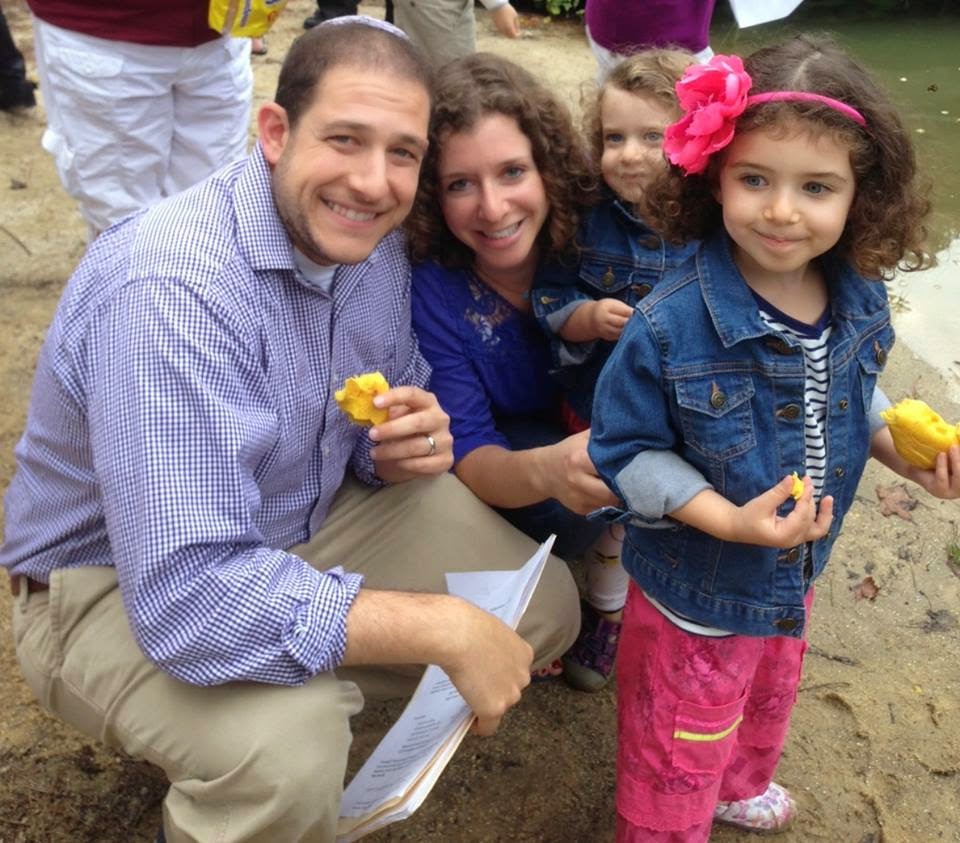
 
For the past 5 years, I have been given the privilege and awe-filled responsibility of serving our incredible TBO community as a rabbi and an educator.  So it is with a heavy mix of emotions that I share with you that I have been offered the opportunity to lead Congregation Or Shalom in Vernon Hills, IL, outside of Chicago, as their next senior rabbi, starting in July.  While this is an incredible opportunity for me to employ the plethora of leadership skills that you have endowed in me through your trust, support, and openness, it also means that I will be moving away from Temple Beth Or.  Rabbi Dinner and Bryan Wiggins and the rest of the TBO leadership have stood by me, allowing Rachel and I to find the right next opportunity for us with the awareness that if that right fit was not there, we would be welcomed back to TBO with open arms.

Over these years, I have journeyed with so many of you through both trying and tragic times and also those incredibly uplifting moments of joy and wonder.  You have given me the awe-inspiring responsibility of bolstering our children’s Jewish education.  In close partnership with our religious school committee and our various principals, we have developed a strong sense of mission and vision for our religious school.  We have experimented together, we have learned together, we have laughed together, and we have cried together – these shared experiences have shaped us all, and I know that they will continue to shape the future of TBO.

My family has found a home here at Temple Beth Or.  Rachel and I have made countless friendships, and the TBO preschool community has lovingly embraced our daughters, Laila and Adaya, helping them to grow and develop their own sense of what it means to be a part of a community. We are excited for our next adventure, as we move to the greater Chicago area and get our girls adjusted to a real winter while further indoctrinating them as Cubs fans!   And yet, we are also incredibly sad to leave TBO and our TBO family.  

Which brings us back to yirah. TBO is so much bigger than any one person. My family and I cannot thank you enough for all the ways you have embraced us, supported us, and helped us find a home.  I am so proud of all we have done together, and I know that TBO is going to continue to be a warm source of community and love and learning and social action – a place where our Jewish values are not only discussed, but lived.  Rabbi Dinner’s wisdom, Zemer Lexie’s ruach (spirit), and Robert’s governance will continue to bolster TBO.  Thank you for the privilege of allowing me to serve you as a rabbi and for the embrace you have put around my family.  Rachel and I are filled with yirah because we now have come to realize, we may be leaving TBO, but we will always be a part of the TBO family, as you have become a part of ours. 

With love,

Ari, Rachel, Laila, and Adaya

Friday, September 19, 2014

Getting Ready for the New Year

This month, leading to the High Holy Days, is the time for reflection and preparation.  If we wish to be able to stand before our community, before ourselves, before God with a clean slate this Yom Kippur - with a truly free conscience and soul, ready to approach the next year of life with openness and alacrity - the work begins now.

How are you?
Rabbi Margolis

Usually, when we hear the words, "How are you?," we interpret a surface-level sense of the question and respond in kind.  "I'm fine."  "The kids are funny this week."  "We're pretty busy, but we're hangin' in there."  These are the answers that we usually muster to respond.


But today, I am going to expand upon the question: How is your soul?  How are you doing in the deepest chambers of your heart?  What is it that you desperately want but are unafraid to even try to achieve?  What burning desires for change are you burying under a pile of routine, habit, and perceived comfort?

This is the time for each of us to ask these questions ofourselves. Yes, these are not easy, simple reflections, but that is the key to this time of year.  It's time to do some work.  I know most of us are already overworked and overstressed, but this is the time for us to do some  
work on ourselves.


If you're like me, you are probably reading this on a mobile device, scanning it for the most part, to get a quick glimpse of what the email says before filing in the never-ending pile of "I'll get to its."  So, I'm going to make it a bit easier to find a way to do this work.  


1) Copy the following list of questions: 

- What is one thing I regret from the last year?  What can I do this week to begin addressing it?
- What is one thing I wish to keep from this past year?
- Who is one person from whom I need to ask forgiveness?  (Now go to my calendar and put in a time to contact him/her) 
- What is one thing I need to forgive in myself?
- When can I do another check-in next week?

2) Open your calendar for the week and find a time to paste this text into an appointment slot.  Set an alarm reminder! (Even just leaving 15 minutes can do a world of good!)

3) Open up a document on your device, paste the text into it, and even try keeping a running record of your answers

4) Upon successfully navigating your first "appointment," go ahead and schedule the next one!


With a little practice at this, what may start as a surface-level, "How are you?,"  might just develop into revealing some of the answers to the deeper questions posed earlier in this Blast.  Take the time this Elul to do the work, so that you can make this High Holy Day season the best one you've ever had.  Looking forward to celebrating the New Year with you!


- Rabbi Ari N. Margolis

Saturday, April 26, 2014

Day 11: Shabbat

Today is the day of rest, Shabbat.

I'm not going to make a long Omer entry.  Rather, make it a Shabbat!

Shabbat Omer Day 11 Journal: Take a break from writing and be with family.

Shabbat Omer Day 11 Actions:
  •  Do something restful and renewing with family and loved ones
  • Read a bit of this week's Torah portion, Kedoshim.  It has many core teachings, including the one that says, "Love your neighbor as yourself," and "Do not stand idly by the blood of your neighbor."  
Shabbat Shalom!


Ha-yom echad Asar yom, shehem sh'vuah echad v'arba'ah yamim la-omer
Today is the 11th day, which is one week and four days of the Omer

Omer Day 10: Israel

This week we are learning, and the topic for today is Israel.  There are so many misconceptions, partial understandings, uninformed opinions and biases that get strewn about in the public sphere about this tiny spec of land along the Mediterranean Sea.
I love Israel - I think it is an incredible country, one filled with contradictions and surprises.  It is a land filled with diverse people and ideas, floating as an island of democracy amidst a sea of . . . non-democracy.  And as a Jewish person, this Jewish state steeped in our Jewish historical roots, carries a great significance - not only as a place where any Jewish person can go to escape persecution, but also as a place where being Jewish feels natural and easy.  It is the fulfillment of a dream and a yearning that was thousands of years old, and we are fortunate enough to witness and experience it in our lifetimes.  There is so much more cultural cooperation, even across the lines of Jew and Muslim; Palestinian and Israeli than we hear about in our local news. But you wouldn't know it without searching deeper.

I may not agree with all of the Israeli government's stances and responses, just as I do not always agree with the actions my local or national government here in America.  And I see many ways in which Israel could improve.   I hope and pray for a time of peace and a time where all who live in the areas that Israel now controls can live in freedom and security, when those in the region can grow up with guitars in their hands and never need to learn how to hold guns. I also pray for a day where my smicha (ordination) as a Reform rabbi is seen in Israel as officially competent to lead a community as it represents here in America.

It is from this place of love that I want us to know more about how we can significantly help to improve Israel in the year to come.  Every few years, there is an election of the World Zionist Congress.  This is a body made up to represent all of the diaspora Jewry as a counsel to the Israeli government.  In the last election, the Reform movement's representative, Artzeinu (lit: our land), became one of the most influential groups, obtaining more seats than any other group, and building a coalition that helped to pressure the Israeli government not to give in to more restrictive conversion laws from the ultra-religious groups in Israel.  This coming year, register to vote, and do so for Artzeinu - (And note: if you are in Hadassah, there is no conflict, as Hadassah's seats are guaranteed so that its members can vote for any other group they'd like).  I'd write more, but this website has all the info you could need.  

Hayom asarah yamim, she-hem sh'vuah echad u'shlosha yamim la-omer
Today is the tenth Day of the Omer

Day 10 Omer Journal: List questions you have about Israel that you'd like to explore

Day 10 Omer Action: Follow some Israeli news sources to get caught up with what is going on, on the ground in Israel.  If you have questions, send them to me!

Here are some sites I recommend for understanding aspects of Israel:
www.arza.org - the Reform movement's Israel advocacy group.
haaretz.com - my go-to Israeli newspaper that is in English
jpost.com - Jerusalem Post online - one of the most known Israeli periodicals
ynetnews.com - Online version of Yedioth Ahronoth, another widely distributed Israeli newspaper.  

I would recommend reading not just one of these sources, but read across them in order to get a deeper understanding of what the story really might be. 


Thursday, April 24, 2014

Omer Day 9: Learning

I hope the low-hanging fruits of yesterday tasted good!  I know mine have motivated me to keep going.  In fact, tonight, I have a plan to keep working at my organizing that I had started!

But before we get too carried away, we still have some planning to do.  Now that we have identified what areas we might want to focus on, what our strengths, weaknesses, resources, hopes and dreams may be, I'm recommending that we take some time to learn.  Study, research, gain new insight - when we gain acquire new perspectives, we can't help but see the world and ourselves differently.  We change when we learn.

Today's learning is aligned with the Rabbis Organizing Rabbis (ROR) group that I've been working with.  I'm going to do some learning on the topic of Immigration Reform and I invite you to do so, as well.  Here is a blog post by Rabbi Samuel Gordon, who has been a part of the Chicago group of organizers who have had some incredibly powerful (both in an emotional way and in an effectiveness-way) experiences.

I've been reading through these sights in order to further educate myself on the issues involved in immigration reform so that I can become a better advocate.  Though we are at a standstill in congress (what else is new?) it really does seem as though this is not such a partisan issue - everyone sees the need for a better set of laws, it's just a matter of what the laws are and who is brave enough to stick their neck out and stand for something, as opposed to just waiting to see what one's voter base will tolerate.  I'll list the sights below (though I highly recommend if you look at just one, go to the Reform movement's Religious Action Center, where the Jewish basis for Immigration Reform is nicely stated).

The reason our ROR group has been putting out the "I Stand with Ruth" campaign is to bring back to the collective consciousness our struggle for a better system of immigration laws.  We recently heard from a group of organizers in Chicago the story of a meeting between a local organizing group who is seeking immigration reform and a conservative congressman who came to office by affiliating with the Tea Party movement.  They brought to his attention the story of an individual who was going to be deported after being pulled over for a broken tail light.  That "crime" led the police to discover his status as a person who had come here illegally.  The problem was that his child (or children - unsure about this detail), who is/are US citizens, would be here in the US without a parent.  This congressperson stepped into write a letter to the judge advocating that the individual in question NOT be deported, so that his family could stay together.  He said it went against his Christian values to separate children from their parents. Yet, he said he felt he could not commit to larger reforms to address such problems for fear that he would be challenged by that same Tea Party group that helped him get into office in a future primary.

Regardless of how one might feel about immigration reform as a whole, a story like this one exposes the challenges our current system brings to our society.  Enforcing the law could lead to a slew of children growing up in the foster care system in America or at the very least, growing up without being able to see one of their parents - not because the parent cares little for their children, but ultimately because they care that much for their children.  This is one of many reasons to continue pushing for a system to be changed.
Ha-Yom tishah yamim she-hem sh'vuah achad ushnai yamim la-omer
Today is Day 9 of the Omer, which is one week and two days of the Omer


DAY 9 JOURNAL: What have I learned today that can help me continue to improve myself?

DAY 9 ACTION: Spend some time researching a topic that can be helpful in the quest for self-improvement, helping us to our goals.


My Journaling:

So, my learning today was geared towards immigration reform.

  • I learned of the following great site from the National Immigration Forum - it taught me that there may be some more local groups here in NC that I might be able to partner with in taking action locally.  
  • Immigration success stories like this one are getting harder and harder to find, as many of the most talented who are even studying here in the US cannot get the proper paperwork to continue advancing our homegrown companies and technological advances. 


Wednesday, April 23, 2014

Omer Day 8: Tasting Some Low Hanging Fruit

Welcome to the second week of our Omer Counting!

Now that we've accounted our inventory in various aspects of our lives, this week will be dedicated to planning.  But before we really plot things out in order to put things into action, it is important that we also taste a little low-hanging fruit.  Shavuot is still quite a while away, and we can wear ourselves out with all the reflection and planning phases so that we have no energy or motivation left to implement our strategies. We MUST avoid this at all costs!!

For those of you unfamiliar with the term, "Low-Hanging Fruit," it refers to an easily accomplished goal. There must be something on one of the lists that we've made that we could probably rectify pretty quickly and easily, and therefore "taste" the reward of accomplishing something without making a monumental effort. Go back and scan your journals, find a task that is low effort/high reward . . . if you only have high-effort items, then pick a piece of that idea and go for it.  If I have the goal of cleaning off my piles on my desk, which might take too much effort to do well, then maybe today I clear off one pile.  And if you haven't kept up with it, no problem, brainstorm an easily achievable goal that can be done today and feel really good about having checked it off your imaginary list.

This is one of the reasons we cling to ritual in Judaism. If we are constantly striving for lofty ideals - the kind of personal growth that takes an entire lifetime, we might all become jaded and disparaged over time.  We might give up the pursuit.  So, along the way, we focus in on easily achievable rituals that provide us with structure for our journeys, re-focus our long-term goals, and push us back towards becoming the person each of us hopes to become (and at the same time bring us in contact with one another, lift our spirits with liveliness and food, and help us break the monotony of time that can lead us to states of atrophy).  This Omer period, for instance, is one of those ritualistic invitations.  The low-hanging fruit is just the recitation of the omer blessing, and the pause in doing so.  The fuel we get from its sustenance, though, can help us reach for bigger and better pursuits in ourselves.

Here's to filling us up as we continue to reach higher and higher!

Day 8 Omer Action: Pick a low-hanging fruit and cross it off your to do list!

Day 8 Omer Journaling: Describe how your low-hanging fruit is part of a bigger goal you have for yourself.